
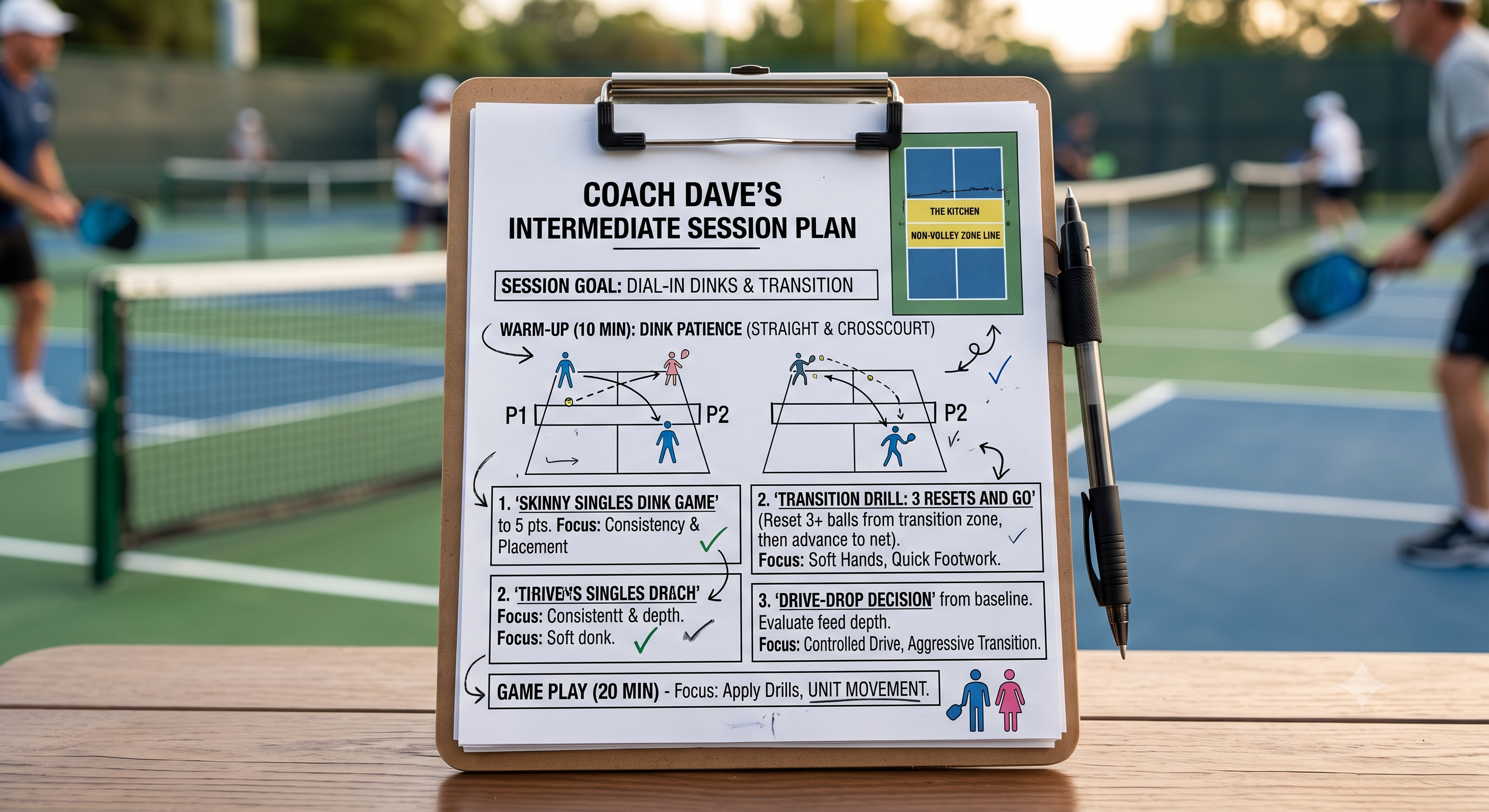
Planning Makes the Difference
The difference between a great coaching session and a forgettable one is structure. Players should leave feeling like they learned something, got a workout, and had fun. That does not happen by accident.
Here is a framework for a 60-minute session that balances instruction, repetition, and play.
Warm-Up (10 Minutes)
Start with light rallying to get players moving. Cooperative dinking, gentle groundstrokes, and some basic footwork patterns. Use this time to observe each player and identify what to focus on during the session.
Avoid skipping the warm-up. Cold muscles and cold paddles lead to sloppy technique and a slow start.
Skill Focus (20 Minutes)
Pick one skill for the session. Not three, not five. One. Break it down, demonstrate it, and run two or three drills that build on each other.
For example, if the focus is the third shot drop:
Start with a stationary feed drill (no movement). Progress to a live feed from the baseline (add movement). Finish with a game scenario where the drop is required before attacking.
Guided Play (20 Minutes)
Set up games with constraints that reinforce the skill you just taught. If the session focused on drops, play points where the serving team must execute a drop before moving forward. This bridges the gap between drills and real play.
Open Play and Wrap-Up (10 Minutes)
Let players play freely for the final stretch. Watch for them applying the new skill in live situations. End with a quick summary: what they worked on, what to practise before next time, and one thing they did well.
Why This Works
Structure gives players confidence in their coach. They can feel the progression within the hour. Over time, they see the results stack up, and that is what keeps them coming back.