
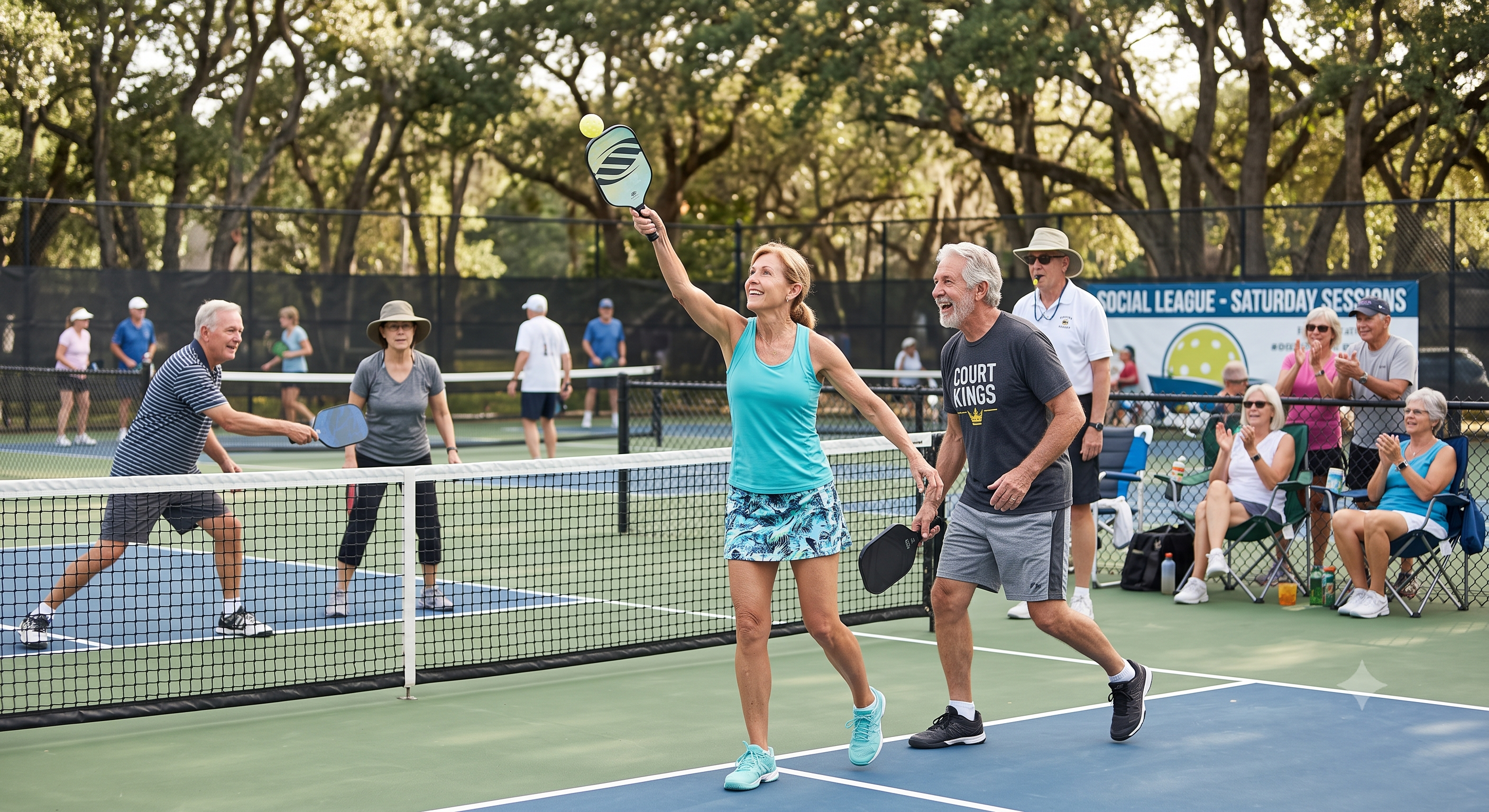
The Fastest-Growing Demographic in Pickleball
Seniors make up a significant portion of the pickleball community, and for good reason. The sport is accessible, social, and provides excellent low-impact exercise. As a coach, you will almost certainly work with older adults, and understanding how to adapt your approach makes all the difference.
Physical Considerations
Older players may have joint limitations, reduced mobility, or slower recovery times. This does not mean they cannot play well. It means your coaching needs to account for their bodies.
Warm-ups should be longer. Allow 15 minutes instead of 10. Include gentle stretching and mobility work.
Drills should allow rest. Rotate players in and out rather than running continuous high-intensity sets.
Footwork cues should prioritise balance. Keep your weight centred is more useful than stay low for a player with knee concerns.
Communication Style
Many senior players bring decades of experience from other sports. They respond well to clear, respectful instruction and dislike being talked down to. Explain the why behind each drill, not just the how.
Avoid jargon that assumes familiarity with competitive pickleball culture. Use plain language and demonstrate everything.
Session Design
Shorter rallies with more breaks. Smaller groups so each player gets individual attention. Focus on strategy and shot placement rather than speed and power.
The social element matters too. Many senior players come as much for the community as the sport. Build time for conversation into your sessions.
The Coaching Opportunity
Senior pickleball is not a secondary market. It is a core part of the sport. Coaches who understand this demographic well can build loyal, long-term client bases and make a genuine difference in people's health and wellbeing.